
The Story Behind HWPure
HWPure is an independent benchmarking project built around transparency and contextual data. It began in mid-2022 as a personal experiment in web development and gradually evolved into a niche reference platform with global organic traffic and a clear identity.
Origins: A Learning Project with Real Data
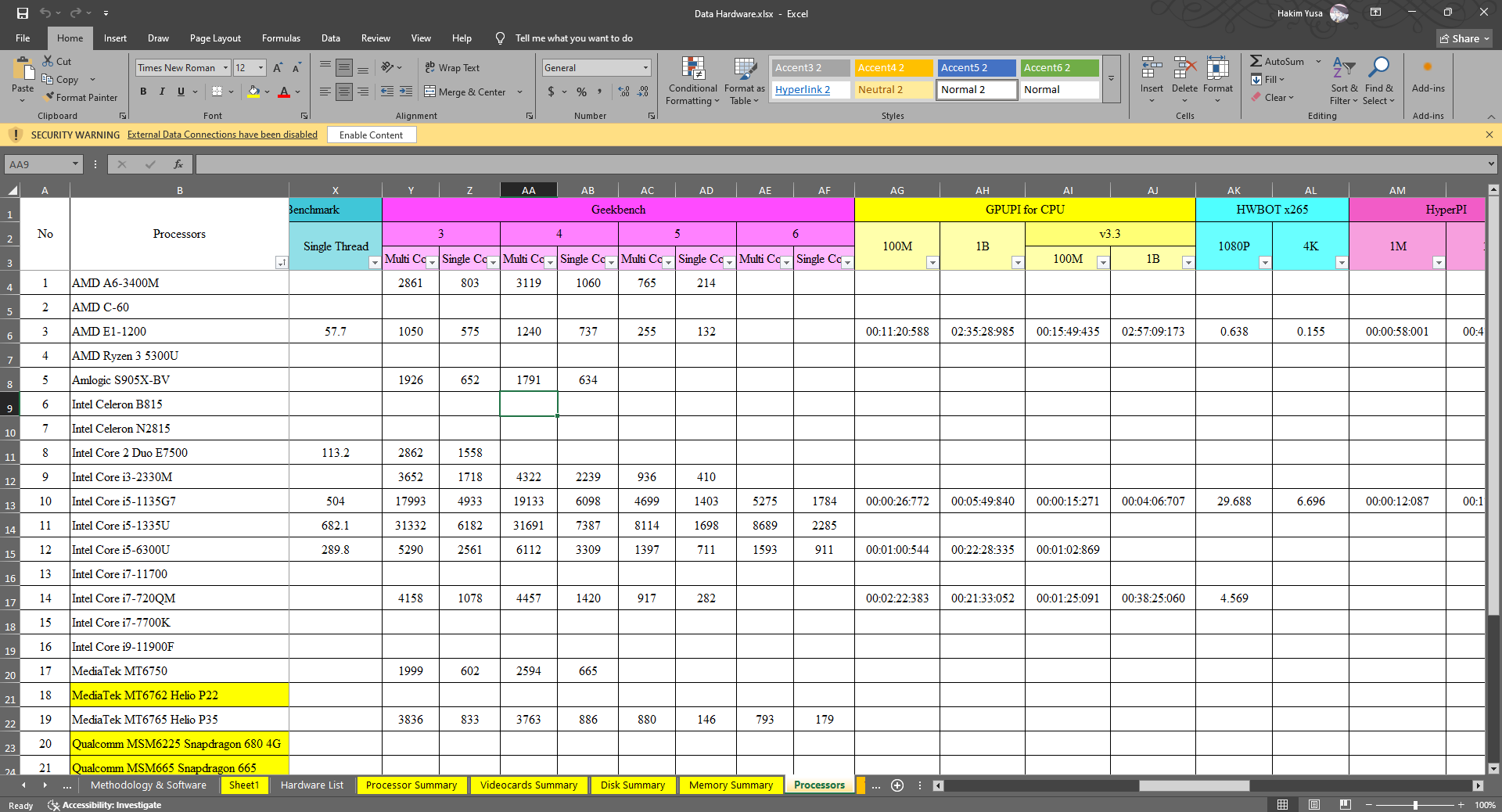
Before HWPure existed, the data behind it already did. Its creator had accumulated benchmark results across various devices and stored them in spreadsheets. At the same time, he was learning how to build modern websites and needed a meaningful subject to experiment with. Instead of creating a marketplace clone or a simple portfolio site, he chose to turn his benchmark data into something useful.
The initial spark came from attempting to submit results to HWBot, a well-known benchmarking platform focused on extreme overclocking. Many devices, especially smartphone SoCs, did not exist in the database, and the submission flow did not align with non-overclocked, everyday hardware testing. Rather than abandoning the idea, he decided to build his own platform for the data he already had.
HWPure did not start as a startup idea. It began as an experiment that happened to find a niche.
The Benchmarking Problem: Numbers Without Context
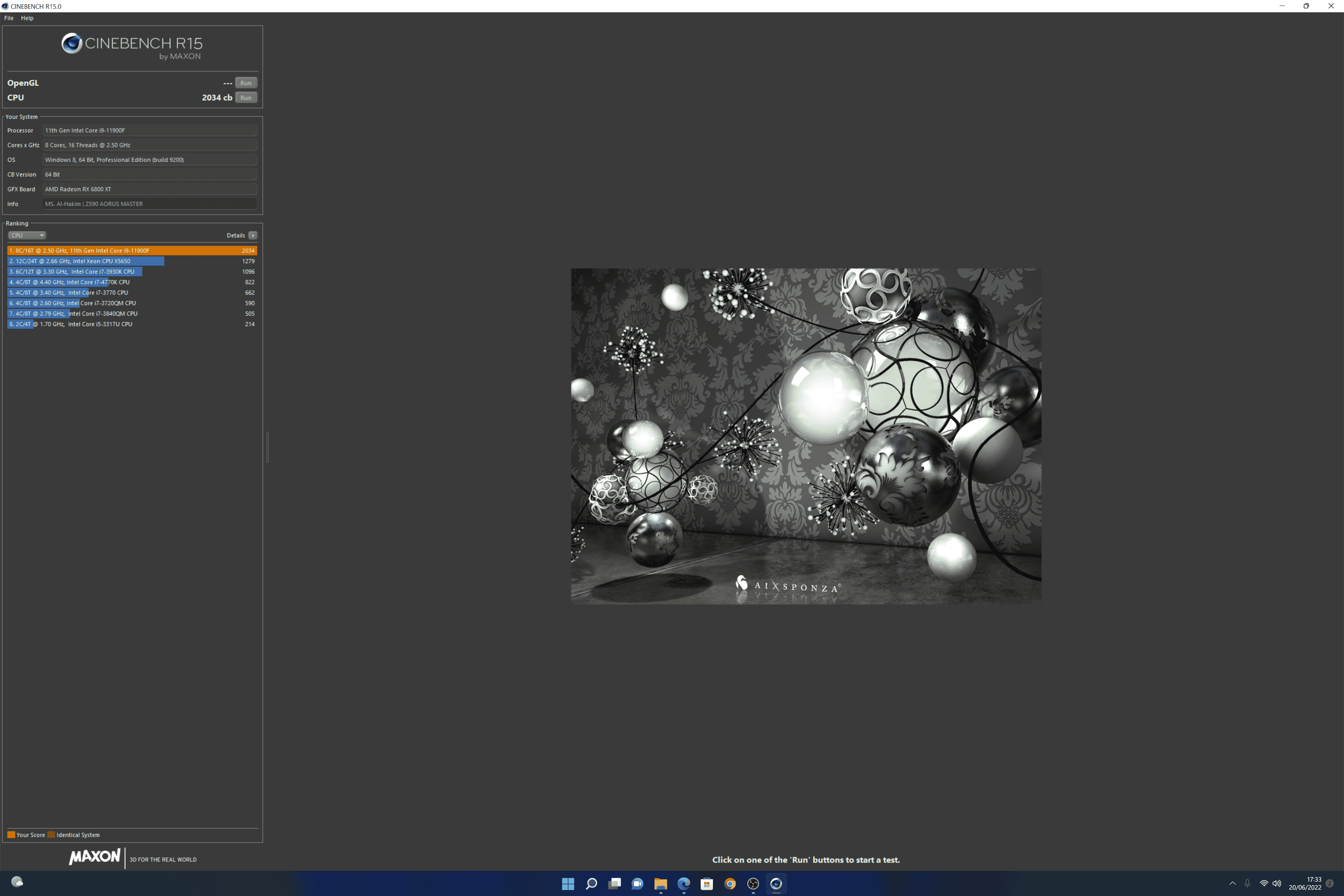
Benchmarking online is common, but clarity is not. Many published results lack important information that affects performance, such as:
- RAM configuration
- Storage type
- Cooling conditions
- Software versions
- Platform testbed details
Without context, numbers lose meaning. This affects enthusiasts, content creators, and reviewers who rely on accurate data to compare devices fairly. HWPure’s goal was simple: make benchmark data contextual, transparent, and verifiable.
Audience and Use Cases
From the beginning, HWPure targeted technical users rather than the general public. Its natural audience includes:
- PC enthusiasts
- Content creators
- Hardware reviewers
- Users seeking performance references
Small niche, but deeply valuable to the people inside it.
Transparency as a Product Philosophy
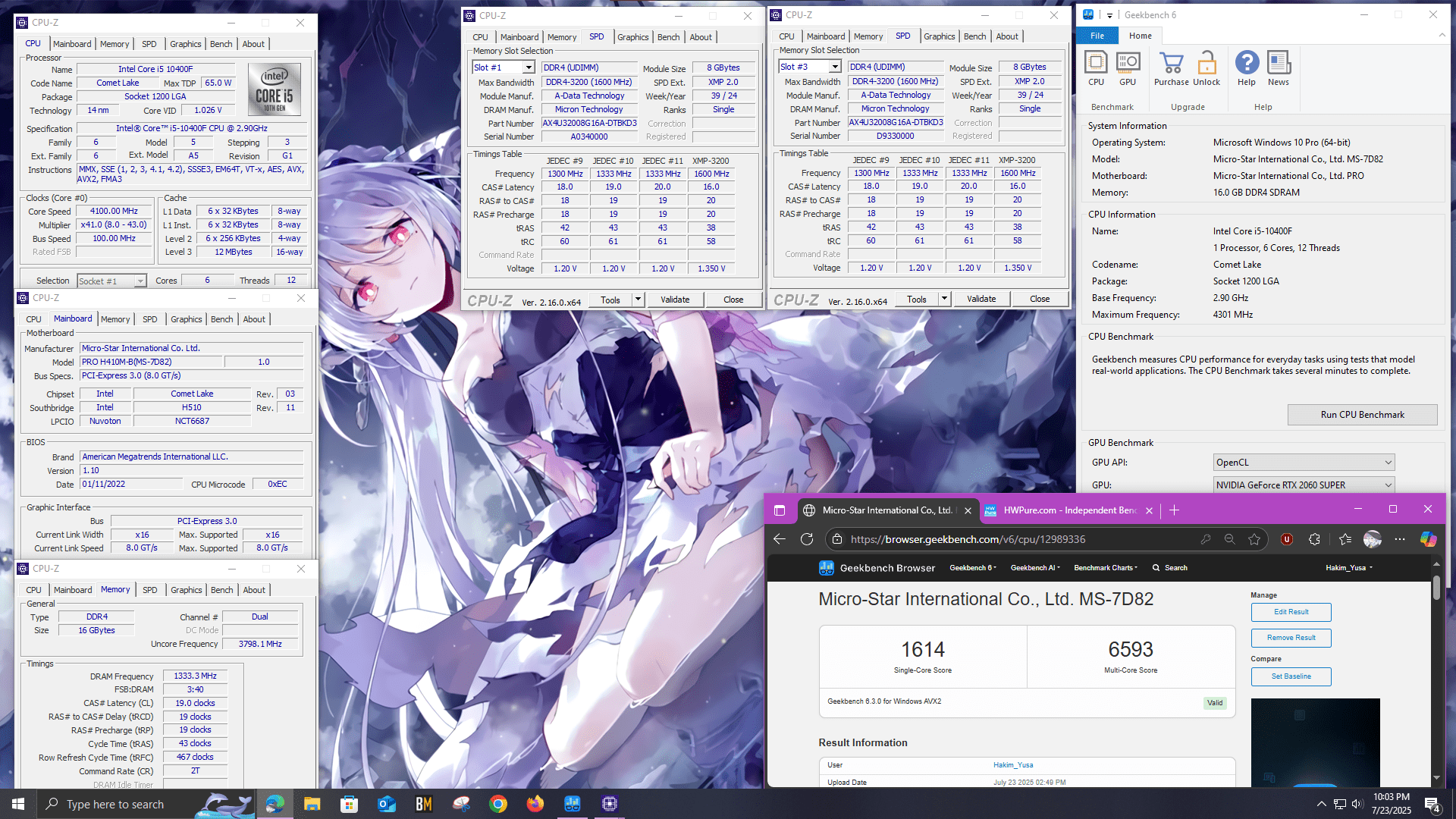
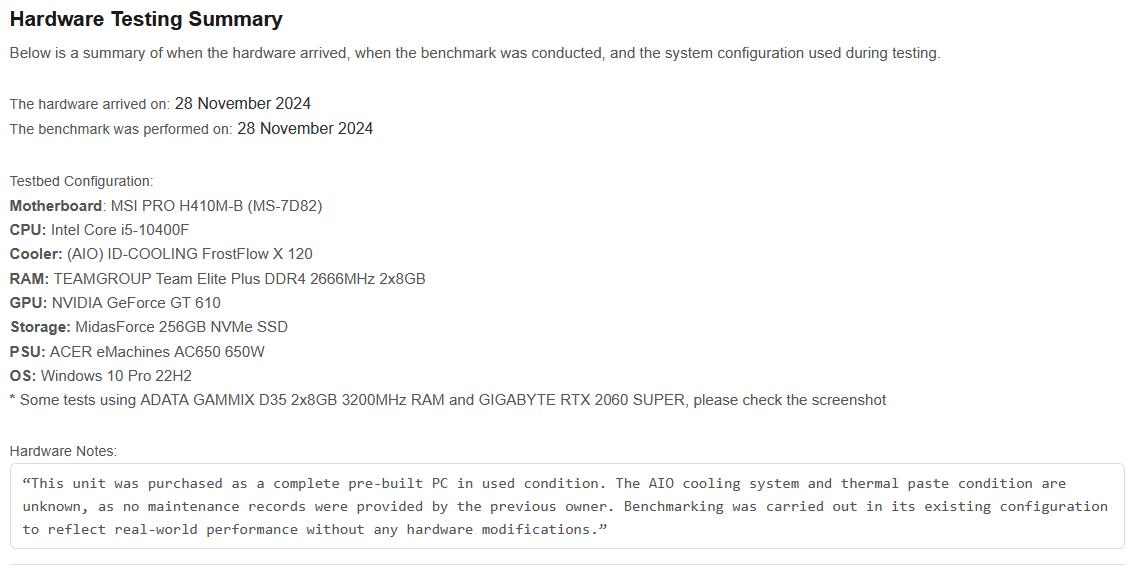
Transparency is not marketing language here. It is the core design principle of HWPure. Several practices support this:
- Screenshots are mandatory as validation
- Full testbed specifications are shown
- Anomalies are disclosed
- Results are presented as-is without score smoothing or aggregation tricks
This approach was partially inspired by HWBot, where screenshots serve as verification. HWPure adapted that idea beyond overclocking and applied it to regular hardware testing.
Many existing platforms publish benchmark results without testbed details or software information. Others lock submissions inside proprietary result links. HWPure chose openness instead.
Technical Evolution: From Static Page to Self-Hosted Platform
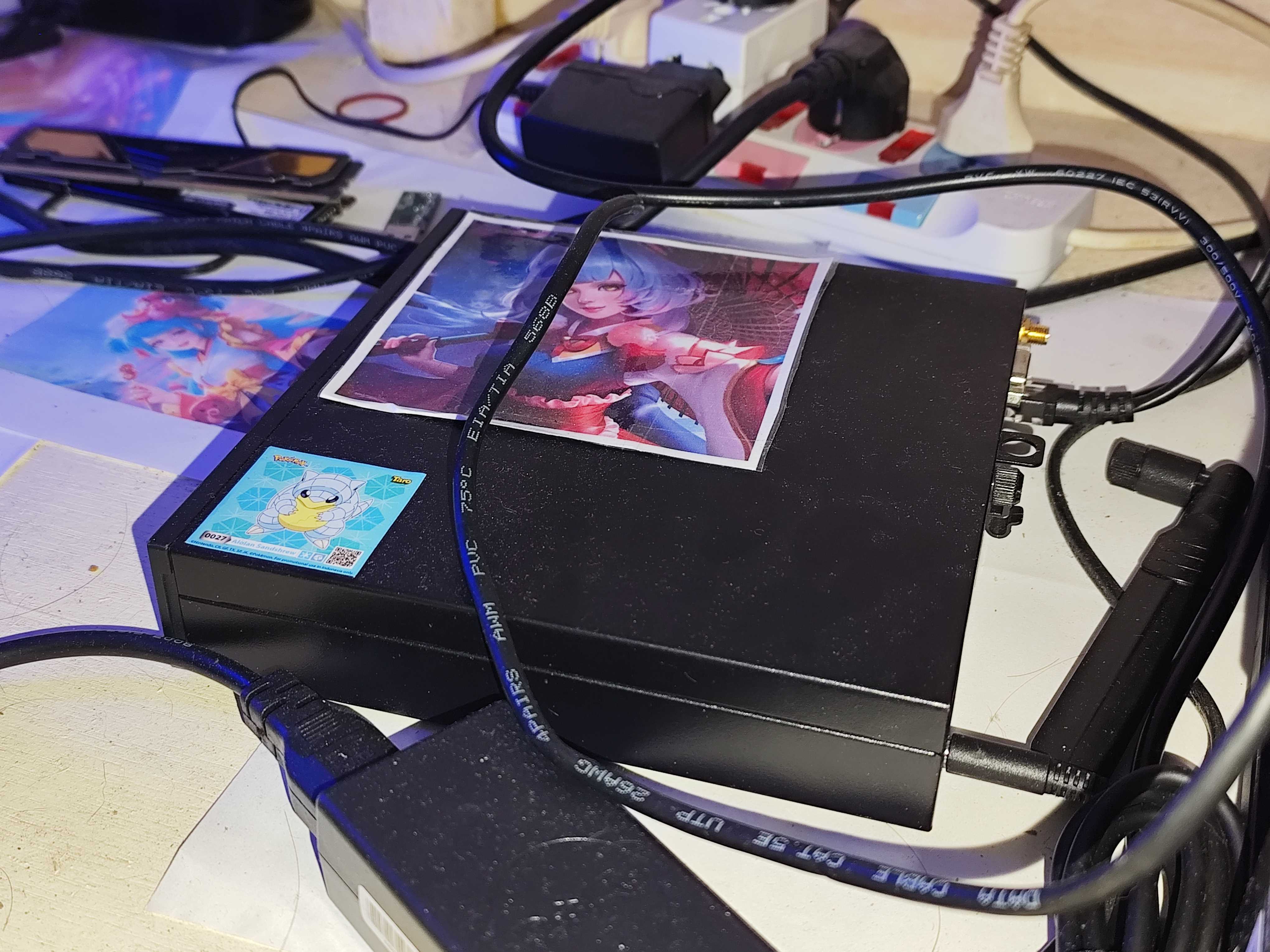
The first version of HWPure was built as simple static HTML. As features grew, the project moved to Laravel for easier data modeling, querying, and future development. Later, it migrated to a self-hosted environment both to reduce hosting costs and to explore Linux server administration.
Today, HWPure runs inside a Proxmox environment on a Dell OptiPlex 5050 Micro (i3-6100T), supported by additional storage infrastructure and NAS components used by the creator for various self-hosted projects.
Early Signals and Organic Traction
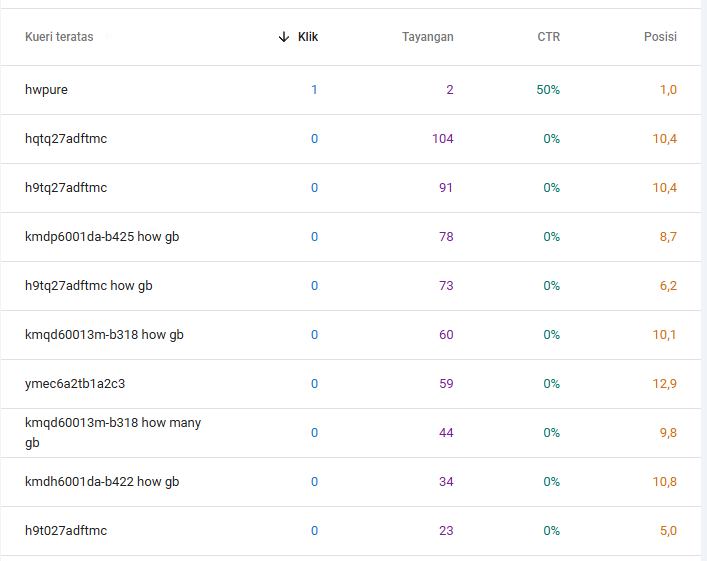
The moment HWPure started to feel real was when Google Analytics and Search Console began reporting organic traffic. The numbers were small, but they were consistent. In the first year, typical traffic hovered around 5–10 clicks per week, mostly from outside the country.
The keywords were unexpectedly precise and technical, such as:
“h9tq27adftmc”, “kmdp6001da-b425 how gb”, “kmqd60013m-b318 how gb”
These queries revealed the kind of long-tail hardware information users could not easily find elsewhere and confirmed the value of the niche HWPure was occupying.
Feature Growth and Incremental Development
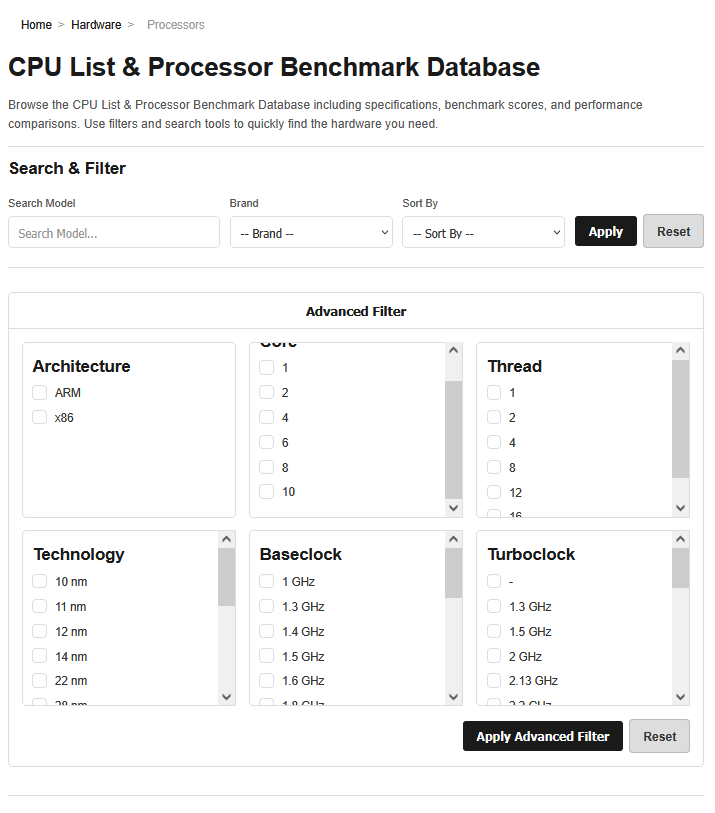
Over time, HWPure expanded through small and practical iterations. Among its notable features:
- Hardware list
- Benchmark software catalog
- Device classification (desktop, laptop, smartphone)
- Compare functionality
- Storage benchmark section
- Overclocking (OC) Database
There is an ongoing plan to introduce a HWPure Community, allowing external users to submit results under a unified validation standard.
Monetization, Ecosystem, and Future Direction
In mid-2024, HWPure applied for AdSense to support operational costs. Revenue is not the primary focus, but sustainable operation matters for long-term growth. Future monetization may include advertising and affiliate models.
Beyond that, the ecosystem is expanding toward a complementary blog, a larger storage benchmark section, and coverage of rare or historical hardware such as Transmeta, Cyrix, AMD Geode, and UltraSPARC.
Foundation and Possible Pivot
If HWPure continues to grow, the ideal end state is a comprehensive, open, and trustworthy hardware performance database. If one day the project must change course, one element would remain: the benchmark data itself. That is the non-negotiable core.
Brand Identity

The name HWPure derives from HW = hardware and Pure = transparent/unaltered. The naming also pays subtle homage to HWBot, which inspired the project’s initial direction. HWPure is intentionally kept as a standalone brand rather than folded into its creator’s personal website. This allows it to grow on its own terms.